The real trade-off is control vs convenience
Cloud bot sounds modern. Local software sounds old-fashioned. That framing is misleading.
For trading software, the real question is where you want the critical parts of the workflow to live: strategy logic, API credentials, monitoring and execution decisions, logs, and the first place you look when something goes wrong.
A cloud product may feel easier to start with. A local product often gives you more direct control over privacy, dependencies, and troubleshooting.
What a cloud trading bot usually means
A cloud trading bot typically means the software is running on infrastructure controlled by the vendor.
That often implies your automation workflow depends on their servers being up, execution logic is not happening on your own machine, and your account setup depends on trust in the provider’s architecture, policies, and operational discipline.
That does not automatically mean it is unsafe. It does mean the trust model is different.
What local trading software usually means
Local trading software means the application runs on your own machine.
Instead of asking what if the vendor cloud has a problem, you are more likely to ask whether your device is stable, your connectivity is stable, your configuration is correct, and whether you can see what the software is doing locally.
That can feel like more responsibility, because it is. But it can also mean more control.
Why privacy is not a side issue
In trading software, privacy is not only about marketing claims. It is about architecture.
If a product is designed so that more of the workflow happens remotely, then more trust is pushed onto the provider. If a product is designed so that the workflow stays local, then more control stays with the user.
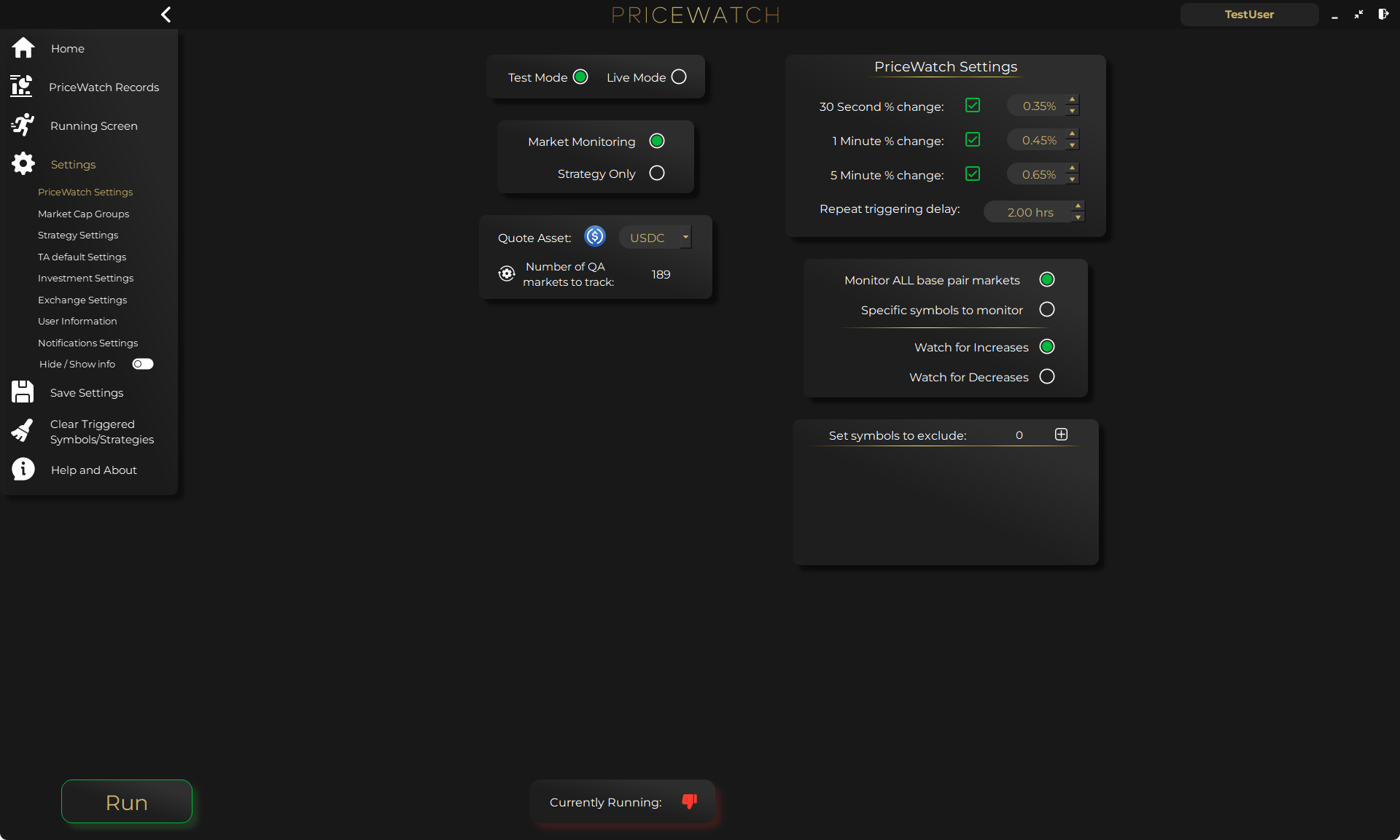
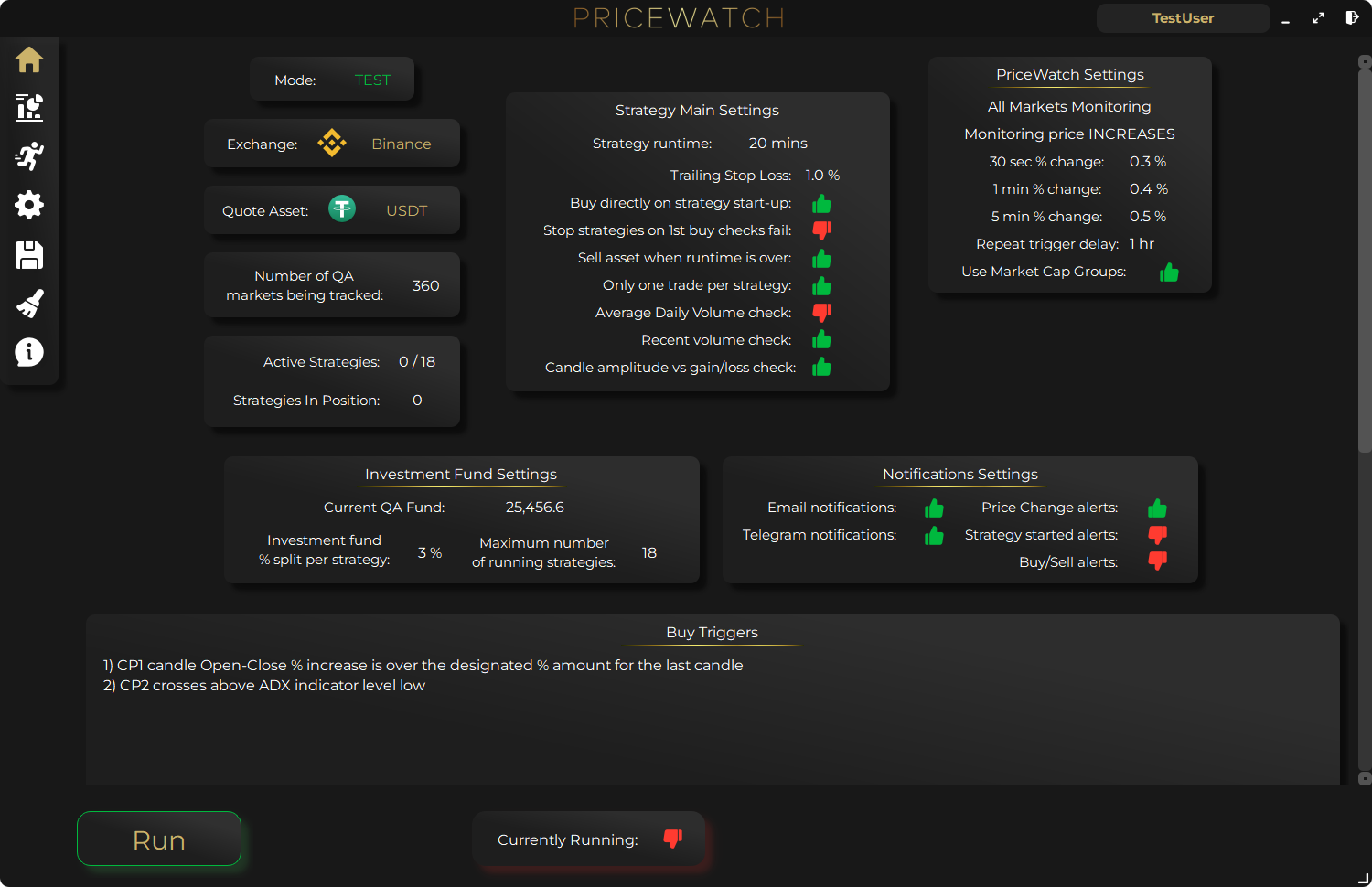
In the current PriceWatch materials, the product is described as a desktop Windows application that runs locally on the user’s machine. The privacy policy and product docs also state that PriceWatch does not collect trading strategies, exchange API keys, portfolio balances, or transaction history, and that trading data and credentials are kept locally on the user’s machine.
The most important failure modes to compare
This is where the cloud versus local decision becomes practical.
A cloud bot can fail because the vendor infrastructure fails, their deployment breaks, or their remote systems have downtime. Local software can fail because your machine has a problem, your internet drops, or your setup is misconfigured.
The key difference is where the failure lives and who can inspect it directly.
- Vendor-side outage vs device-side failure
- Remote black box vs local visibility
- Credential trust model on vendor infrastructure vs local machine
- Always-on convenience vs the discipline of managing a local setup
Trust gets clearer when architecture gets clearer
If privacy and control matter to you, compare products by where they run, what stays local, what leaves the device, and how easy it is to inspect failures before you compare them by feature count alone.
When each model fits better
A cloud workflow may suit you if convenience matters more than local control, you want less responsibility for the environment the software runs in, and you are comfortable with the provider trust model.
Local software is often the better fit if privacy matters to you as a design principle, you want your trading logic and credentials to stay on your own machine, and you prefer direct visibility into what the program is doing.
The mistake is choosing either model without thinking through the trust and failure implications first.
Where PriceWatch fits in this comparison
PriceWatch is positioned on the local-software side of this trade-off.
Based on the current product docs and website copy, PriceWatch is a desktop application for Windows, designed to run locally on the user’s own machine, and built for crypto market monitoring and automated trading.
The current materials also describe 15 supported exchanges, 25,000+ trading pairs monitored across those exchanges, 7,500+ indicator trigger combinations, TEST mode with real market data before LIVE use, and live feed visibility with downloadable logs.
Those points matter because they support the core trust story with concrete facts instead of vague reassurance.
What local execution does not guarantee
Local execution is a strong architectural advantage for privacy and control. It is not a guarantee of perfect safety.
It does not guarantee profitable trading, zero setup mistakes, zero device failures, zero connectivity issues, or zero operational risk.
A local model improves the control surface. It does not eliminate responsibility.
Want to see the workflow in practice?
Start by reviewing the workflow in TEST mode
PriceWatch runs locally, helps you monitor broader markets, and gives you a way to review how the workflow behaves before deciding whether moving closer to LIVE use makes sense for you.
Prefer to keep researching first?
Keep learning before you decide
Get practical workflow ideas, product updates, and new articles by email, or keep reading through the blog at your own pace before you take the next step.
Keep the route moving
Best next pages from here
If this article solved only part of the problem, use the closest route below to keep moving through discovery, alerting, trust, and comparison intent without bouncing back to search.
Discovery route
Crypto market scanner
Use the fixed-intent landing page if you want the clearest explanation of scan-first market discovery.
Alerting route
Desktop crypto price tracker
Go here if your main intent is Windows-based monitoring, price alerts, and local desktop workflow.
Trust route
Cloud bot vs local software
Use this when the next question is privacy, key control, and where the workflow actually runs.
Comparison route
PriceWatch vs TradingView
Use the comparison path if you are weighing chart-first analysis against discovery-first monitoring.
Who this is for (and who it is not for)
Good fit if
- You care about privacy and operational clarity before you care about convenience.
- You want to understand the trust differences between cloud bots and local trading software.
- You are comparing tools based on architecture, not just feature checklists.
Not a fit if
- You only want the fastest possible setup and do not care much where the workflow lives.
- You are looking for guarantees rather than a clearer risk model.
- You do not want to manage any local operational responsibility at all.
FAQ
Is a cloud trading bot less secure than local software?
Not automatically. But it creates a different trust model because more of the workflow depends on vendor-controlled infrastructure. Local software can reduce that dependency when it is designed to keep critical data and execution logic on your own machine.
What is the main advantage of local trading software?
Control. Local software can give you more direct control over privacy, credentials, logs, and failure handling, especially if the product is explicitly designed around local execution.
What is the main advantage of a cloud trading bot?
Convenience. Cloud tools often feel simpler to access remotely and may reduce the amount of environment management the user has to handle directly.
Does local execution remove trading risk?
No. It may improve privacy and control, but it does not remove market risk, setup mistakes, connectivity issues, or device failures.
Why does this matter for PriceWatch?
Because PriceWatch is positioned as local desktop software rather than a cloud bot. That makes privacy, control, and architectural trust part of the core product story, not an afterthought.