Are You Missing Alerts, or Missing the Market?
If you already know which markets matter, alerts may be enough. If you keep missing moves because they never made it onto your list, the real problem is discovery.
Read article →Clear guides for traders who want better market coverage, better structure, and fewer hours lost to manual chart watching.
New to PriceWatch?
If you are figuring out where to begin, these three posts give the clearest route from discovery basics to practical workflow decisions.
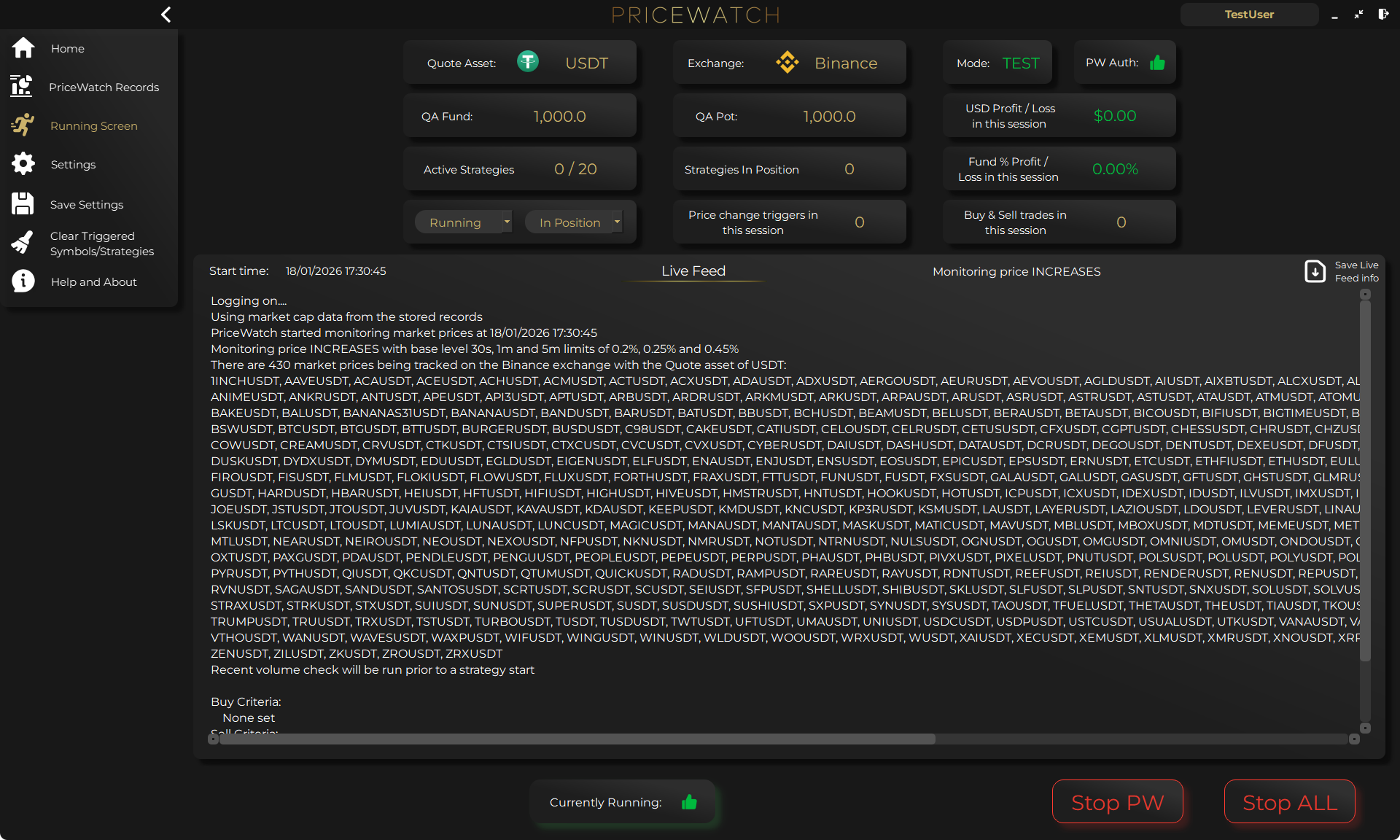
Use this page as a routing layer: start with crypto market scanner for discovery intent, crypto price tracker desktop for alerting intent, and cloud bot vs local software for the trust and local-execution trade-off.
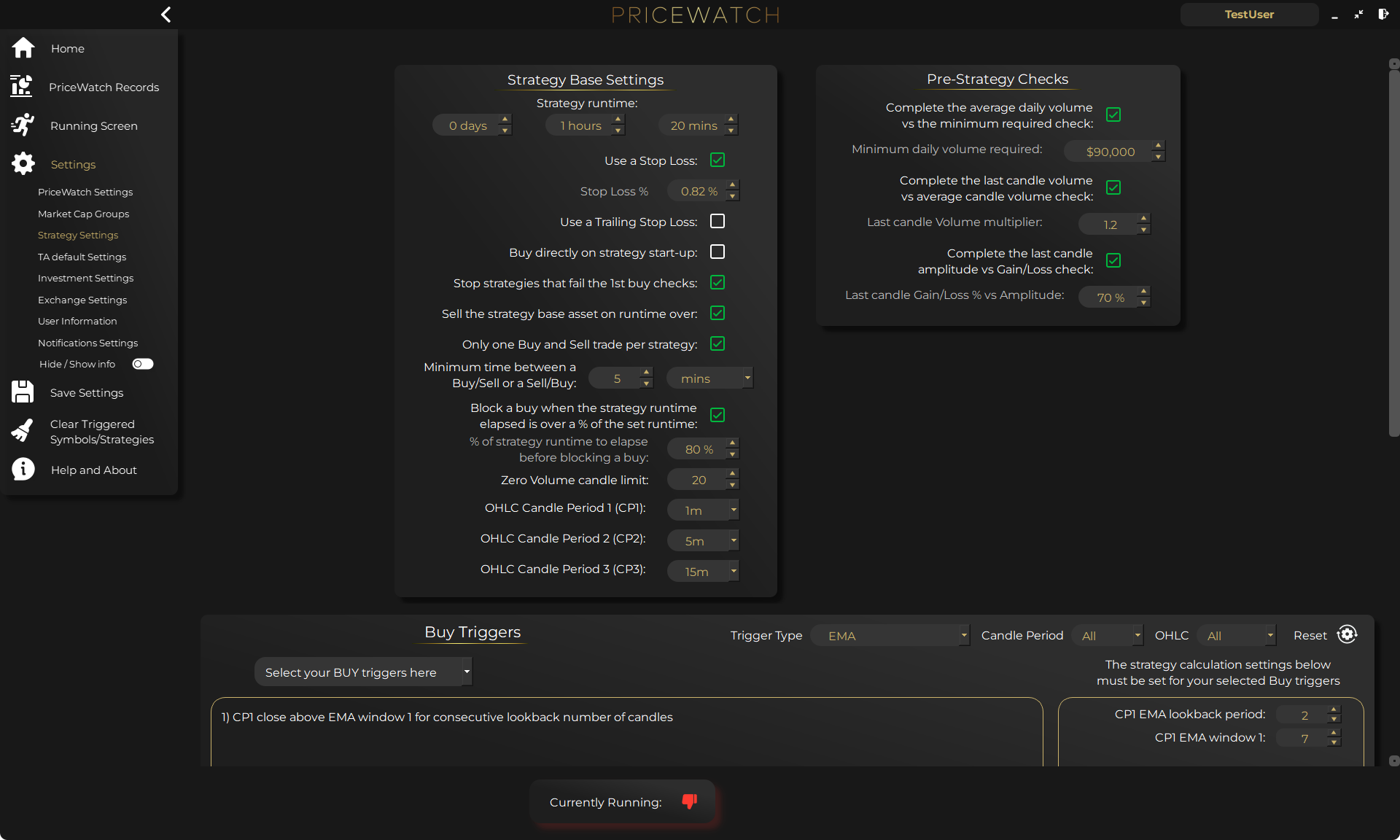
Then branch into crypto trading automation without coding, market cap groups explained, and best no-code crypto trading software if you want the next layer of product-fit and workflow detail.
Start with the category
Understand when a scanner is more useful than a watchlist.
Build the desktop alert workflow
See the local Windows path for monitoring and price alerts, not generic portfolio tracking.
Check the trust model
Compare privacy, control, and failure modes before you commit to a setup.
Workflow design
See where structured triggers fit before you commit to a build.
Market structure
Understand how grouping the market changes scanning and prioritisation.
Tool comparison
Compare the no-code angle against the actual workflow you need.
Testing discipline
Spot when your process is overfitted before you move forward.
Go-live checklist
Review the handoff from testing into real execution.

PriceWatch is desktop trading software built to monitor more of the market, surface real opportunities faster, and help traders act with clearer rules.
17 posts in the blog.
Core routes: What Is a Crypto Market Scanner?, Watchlist vs Whole-Market Monitoring, PriceWatch vs TradingView, and Cloud Trading Bot vs Local Trading Software.
Next-step routes worth crawling and reading: automation without coding, market cap groups explained, best no-code crypto trading software, when TEST mode gets too tight, and before turning LIVE mode on.
Practical writing, product explainers, and strategy-first education.

If you already know which markets matter, alerts may be enough. If you keep missing moves because they never made it onto your list, the real problem is discovery.
Read article →
Once a TEST Mode setup becomes clear enough to explain, the next job is not more tweaking. It is checking whether the workflow stays useful when you leave it alone.
Read article →
A noisy workflow is not a reason to add more complexity. It is usually a reason to make the setup simpler, clearer, and more selective.
Read article →
A strong candidate earns the next step. A weak one usually creates activity without enough quality, context, or review value to justify more attention.
Read article →
Your first TEST Mode strategy should be simple enough to explain, narrow enough to review, and calm enough to teach you something useful.
Read article →
If your process depends on manually checking a shortlist all day, you are more likely to miss moves that begin somewhere else. A broader monitoring workflow can widen discovery without turning your day into nonstop chart maintenance.
Read article →
Turning LIVE Mode on should feel like the next tested step in your process, not the exciting moment when trading finally becomes real.
Read article →
A very quiet workflow is not automatically a better workflow. If almost nothing surfaces, tightening may be shrinking discovery faster than it improves quality.
Read article →
A crypto market scanner helps you discover markets that match your conditions. A watchlist helps you follow markets you already chose.
Read article →
The best no-code crypto trading software is rarely the loudest option. It is usually the one that gives you safe testing, visible workflow steps, and a trust model you can actually live with.
Read article →
The real difference is not just convenience. It is where the workflow lives, where the credentials need to work, and how much control you keep when something breaks.
Read article →
A watchlist helps you focus on markets you already chose. Whole-market monitoring helps you discover the markets you would not have chosen manually.
Read article →
TradingView is strongest for charting and alerts. PriceWatch is strongest for broader crypto discovery, no-code automation workflow, TEST-to-LIVE progression, and local-first control.
Read article →
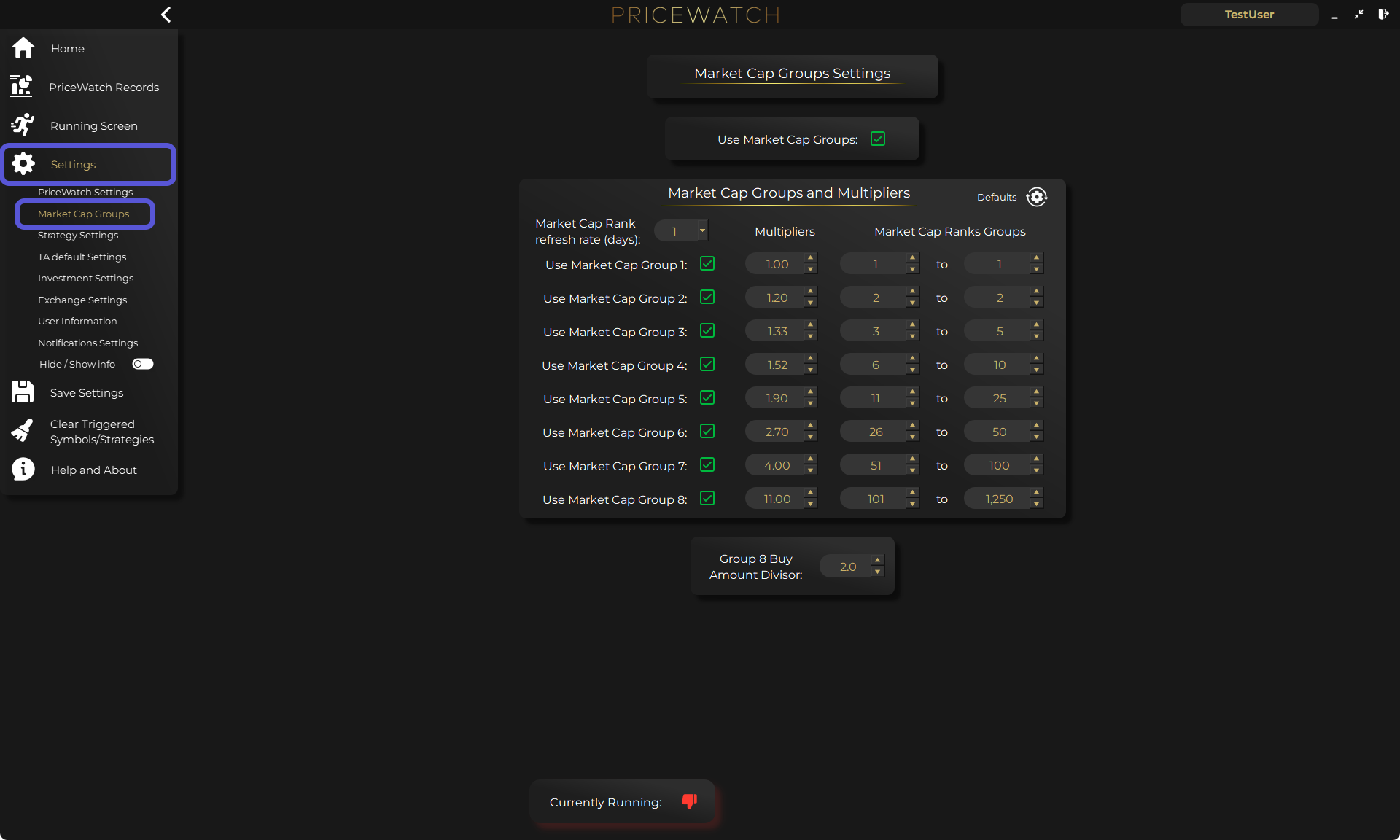
Market Cap Groups help you stop treating every coin the same. Use per-tier multipliers to scale percentage thresholds so your alerts and automation behave sensibly across volatility tiers.
Read article →
The biggest problem is often not analysis quality. It is market discovery. If your tool only watches what you already chose, it can miss what matters next.
Read article →
You do not need to write code to automate parts of your trading, but you do need clear rules, realistic expectations, and software that keeps you in control.
Read article →
PriceWatch is desktop trading software built to monitor more of the market, surface real opportunities faster, and help traders act with clearer rules.
Read article →Get practical posts on market discovery, TEST-before-LIVE workflows, and PriceWatch product updates.
Jump to newsletter signupStart with the free trial and see how broader market monitoring and structured triggers fit your workflow.