The discovery gap
A trader can have strong technical analysis skills and still miss excellent opportunities. The reason is simple: you cannot act on what you never saw.
Many trading tools are strongest after you already narrowed the market down. They help analyse a chart, refine a signal, or manage alerts on a chosen set of instruments. That is useful, but it still leaves a discovery gap.
What that gap looks like in practice
In practice, the gap shows up when a move begins somewhere outside your usual list. A smaller market starts accelerating, volume expands, and momentum conditions line up before it ever makes it onto your radar.
By the time you find it manually, the trade has become a chase instead of a setup.
Why do watchlists miss crypto opportunities?
Watchlists are fine for focus, but they are weak as a discovery system. They reflect what you already know or already suspect.
That creates a bias toward familiar markets and makes it easy to overlook opportunities emerging somewhere else on the exchange.
- You monitor fewer markets than the exchange actually offers
- You spend attention on known names instead of fresh movement
- You often react later because discovery is manual
If watchlists feel limiting
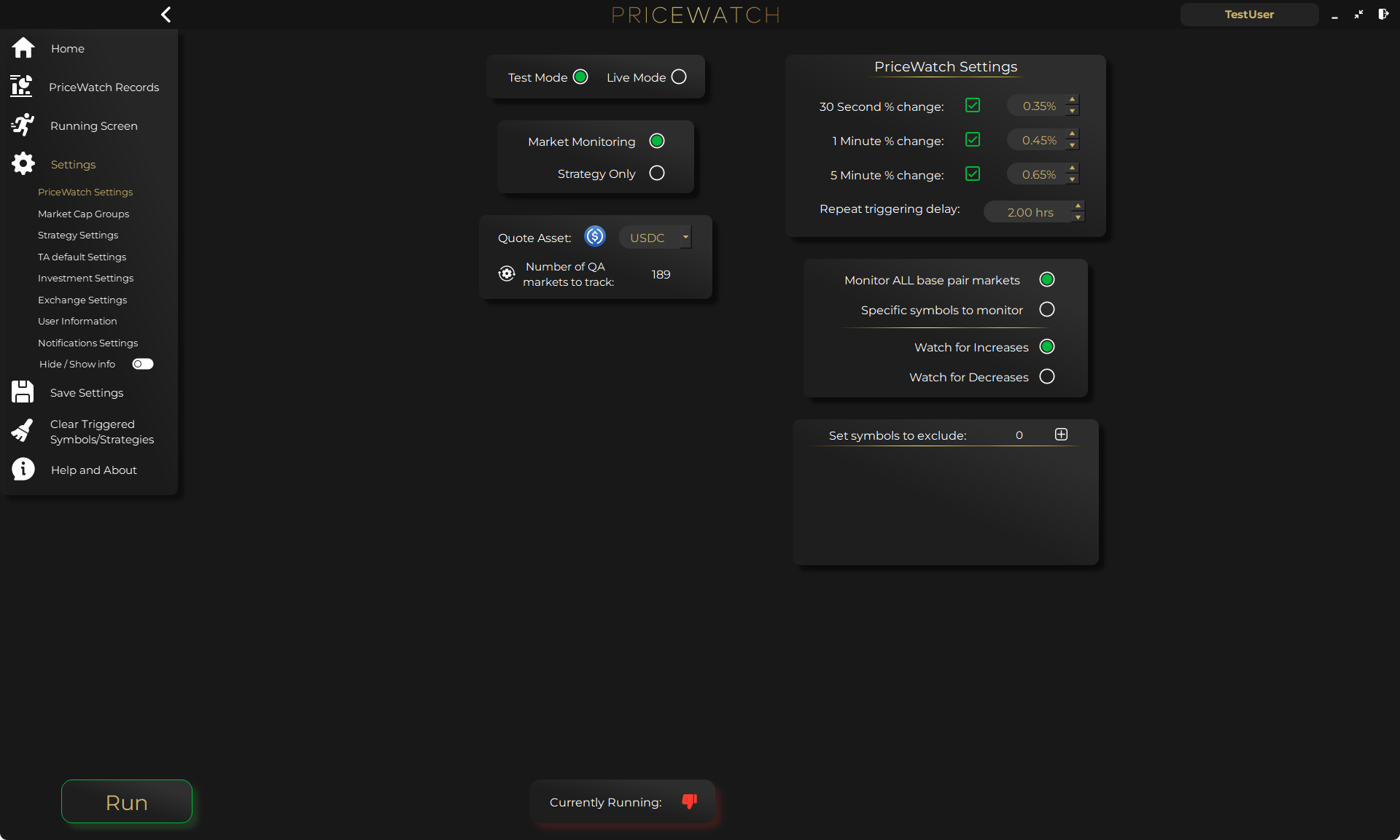
A practical next step is to try whole-market monitoring in TEST mode first, then tighten your rules for what counts as a real opportunity. That gives you discovery without losing control.
Watchlist vs alerts vs market scanners (what each is good for)
Most traders use a mix of tools, but confusion happens when you expect one tool type to do a different job. Here is a simple way to think about it.
- Watchlists: good for focus, weak for discovery.
- Alerts: good for reacting faster, but still limited to what you chose to watch.
- Market scanners: good for earlier discovery across larger market coverage, if they are paired with clear rules.
How to close the discovery gap (a practical workflow)
A practical workflow is not “watch everything forever”. It is: monitor broadly, then decide narrowly.
- Choose one exchange and a clear market focus (for example, one quote asset).
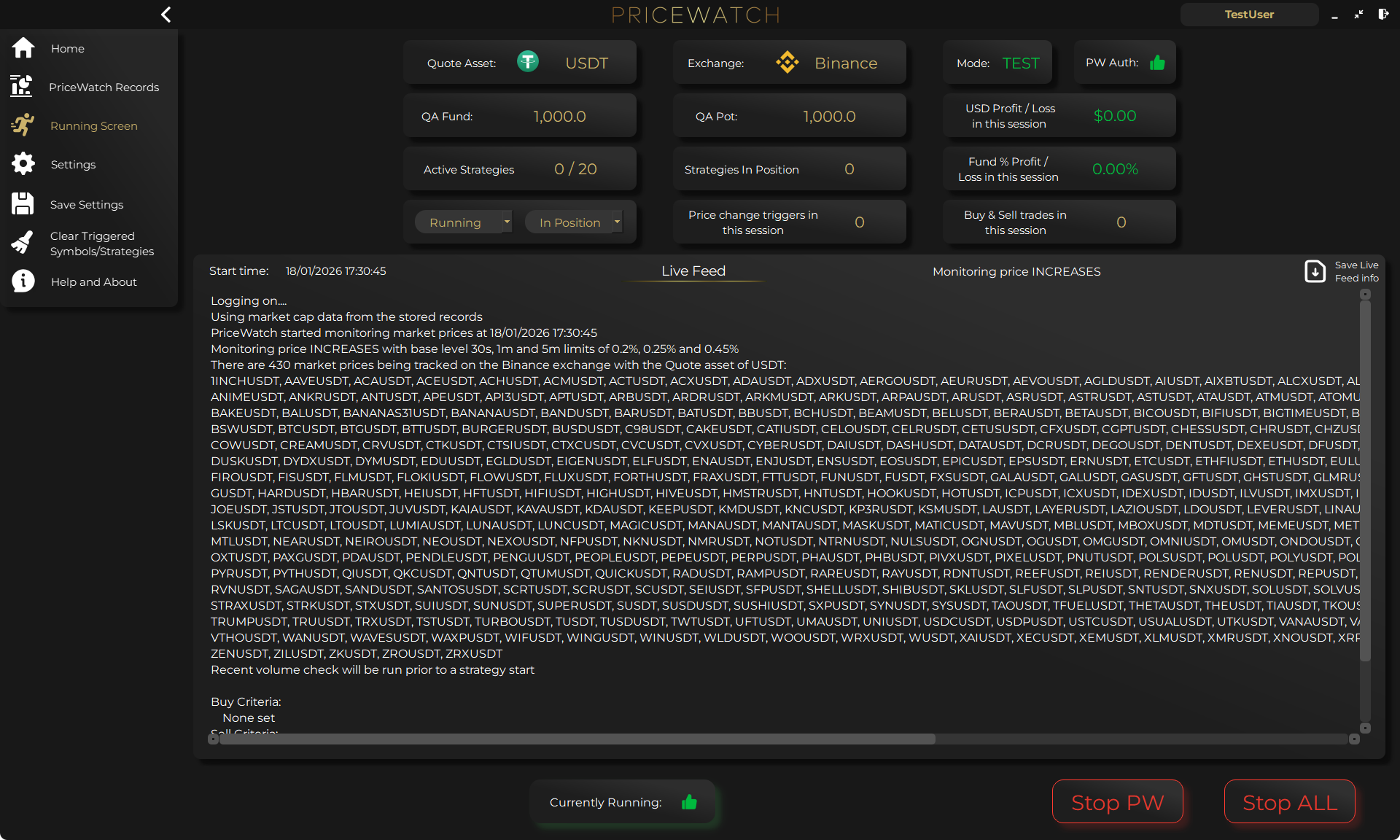
- Monitor broadly within that focus, instead of curating a tiny watchlist.
- Define simple triggers that surface candidates (not final decisions).
- Add validation rules (volume, confirmation, risk limits) before execution.
- Start in TEST mode, then tighten your rules based on what you observe.
What traders need instead
A stronger workflow starts with broader monitoring and narrower decision-making. In other words, the system should do the hard work of watching more, while the trader keeps control over what counts as a valid opportunity.
That is why whole-market monitoring matters. It improves the odds that you see the move early enough for your rules to matter.
Why this matters for PriceWatch
PriceWatch is built around this idea. Instead of treating market discovery as an afterthought, it makes discovery part of the workflow. That gives traders a better starting point before strategy logic, risk management, or execution even come into play.
If you can see more of the market in time, you can make better decisions with less guesswork.
Want to see the workflow in practice?
Start by reviewing the workflow in TEST mode
PriceWatch runs locally, helps you monitor broader markets, and gives you a way to review how the workflow behaves before deciding whether moving closer to LIVE use makes sense for you.
Prefer to keep researching first?
Keep learning before you decide
Get practical workflow ideas, product updates, and new articles by email, or keep reading through the blog at your own pace before you take the next step.
Keep the route moving
Best next pages from here
If this article solved only part of the problem, use the closest route below to keep moving through discovery, alerting, trust, and comparison intent without bouncing back to search.
Discovery route
Crypto market scanner
Use the fixed-intent landing page if you want the clearest explanation of scan-first market discovery.
Alerting route
Desktop crypto price tracker
Go here if your main intent is Windows-based monitoring, price alerts, and local desktop workflow.
Trust route
Cloud bot vs local software
Use this when the next question is privacy, key control, and where the workflow actually runs.
Comparison route
PriceWatch vs TradingView
Use the comparison path if you are weighing chart-first analysis against discovery-first monitoring.
Who this is for (and who it is not for)
Good fit if
- You feel like you are always reacting late because discovery is manual.
- You want a workflow that watches more markets, while you keep control of what counts as a valid opportunity.
Not a fit if
- You only ever trade a tiny, fixed list and do not want broader discovery.
- You want automation without defined rules and validation.
FAQ
Why do watchlists miss crypto opportunities?
Watchlists reflect what you already know and choose. When a move starts outside that list, discovery becomes manual, and you often find it later, after the best entry window has passed.
Are alerts enough?
Alerts help, but they still depend on what you chose to watch. They can improve reaction time, but they do not automatically widen discovery.
What is a market scanner in practice?
A scanner is a workflow that watches a larger set of markets and surfaces candidates that match defined conditions, so discovery happens earlier and more consistently.
How does PriceWatch relate to this?
PriceWatch is built around whole-market monitoring and rule-based triggers, so discovery becomes part of the workflow, not an afterthought.