
The real goal is not complexity
When people hear trading automation, they often imagine complex scripts, fragile integrations, or strategy logic they barely understand. In practice, that is usually the wrong starting point.
The real goal is to remove repetitive monitoring and make execution more consistent. Good automation should simplify your workflow, not make it harder to trust.
What matters more than coding skill
If you want automation to be useful, the important questions are simple. Can you define clear entry and exit conditions? Can you test them safely? Can you understand what the system is doing when it runs?
Those questions matter much more than whether you can write a script.
- Clear trigger logic
- Safe testing before real money is involved
- Visibility into live behaviour
- Enough flexibility to refine without rebuilding everything
If you want to start this week
Pick one exchange, one clear market focus, and one strategy idea you can explain in plain language. Then run it in TEST mode long enough to learn what triggers too often or not enough.
No-code trading automation checklist (what to look for)
If you are choosing a no-code automation tool, the best filter is simple. Look for the pieces that keep you in control and reduce the chance of “black box” behaviour.
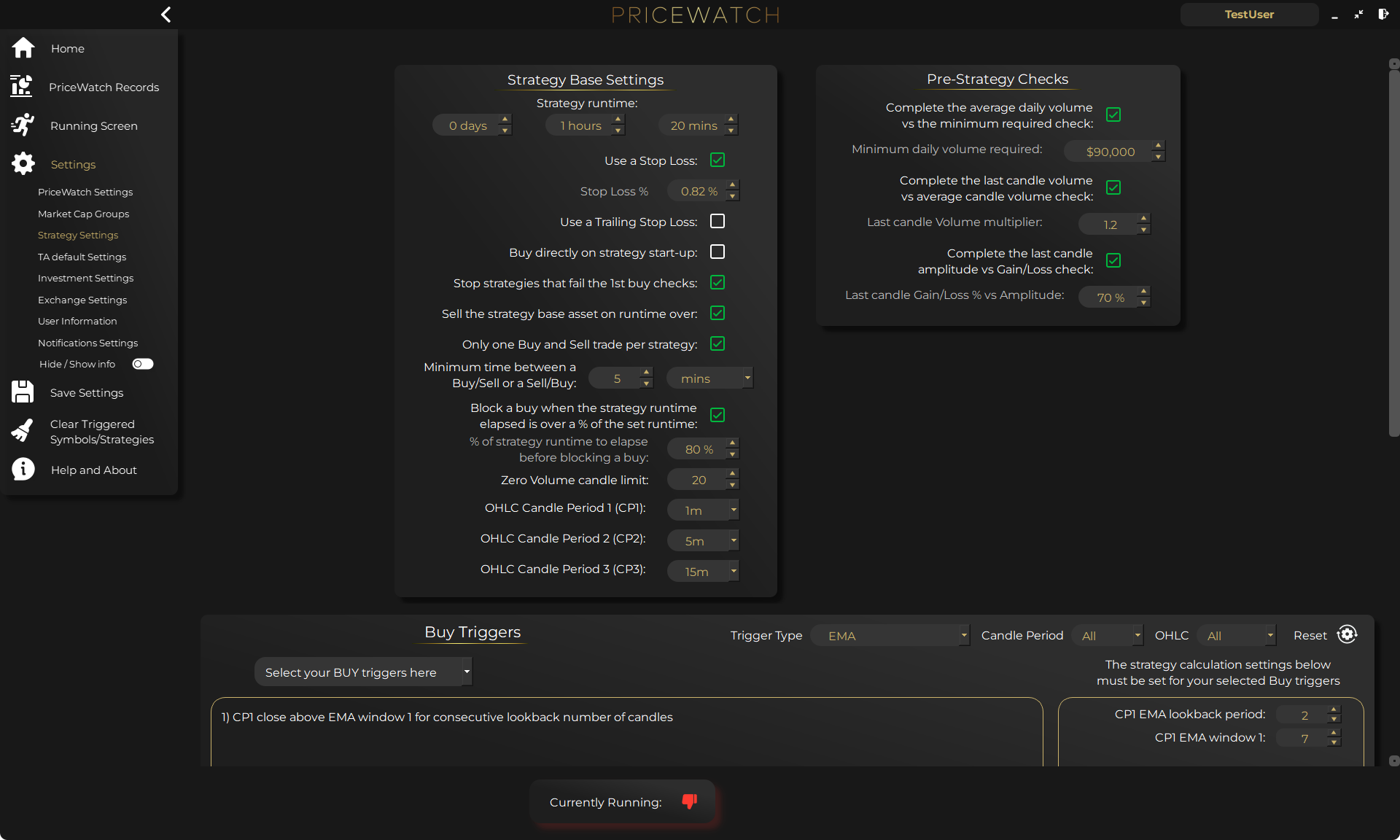
- A safe testing mode (TEST / paper trading) before real money is involved
- Clear entry and exit rule building (you can explain it in plain language)
- Transparency: a live view of what is running and why
- Risk controls (stops, trailing protection, profit targets)
- Easy iteration (small changes do not break everything)
- A workflow that starts small (one exchange, one focus) and scales later
Where many tools go wrong
A lot of tools promise automation, but they still leave traders doing too much manual work. Some depend on narrow watchlists. Others create brittle setups that are hard to maintain. Some feel powerful right up until you need to change one small thing.
That is where no-code automation should be judged properly. It should let you adjust strategy logic without turning every change into a technical project.
What a practical setup looks like
A practical automation setup starts with one exchange, one clear market focus, and one strategy idea that you can explain in plain language.
For example, you might want to monitor a quote-asset market, wait for a combination of momentum and confirmation, and exit with a fixed rule or trailing protection. That is already enough to begin testing something real.
Why PriceWatch fits this approach
PriceWatch is designed so traders can build and run strategy logic without writing code. You can combine indicators, work in TEST mode first, and keep the process grounded in visible rules.
That means the focus stays where it should be: on decision quality, not on technical plumbing.
Want to see the workflow in practice?
Start by reviewing the workflow in TEST mode
PriceWatch runs locally, helps you monitor broader markets, and gives you a way to review how the workflow behaves before deciding whether moving closer to LIVE use makes sense for you.
Prefer to keep researching first?
Keep learning before you decide
Get practical workflow ideas, product updates, and new articles by email, or keep reading through the blog at your own pace before you take the next step.
Keep the route moving
Best next pages from here
If this article solved only part of the problem, use the closest route below to keep moving through discovery, alerting, trust, and comparison intent without bouncing back to search.
Discovery route
Crypto market scanner
Use the fixed-intent landing page if you want the clearest explanation of scan-first market discovery.
Alerting route
Desktop crypto price tracker
Go here if your main intent is Windows-based monitoring, price alerts, and local desktop workflow.
Trust route
Cloud bot vs local software
Use this when the next question is privacy, key control, and where the workflow actually runs.
Comparison route
PriceWatch vs TradingView
Use the comparison path if you are weighing chart-first analysis against discovery-first monitoring.
Who this is for (and who it is not for)
Good fit if
- You want to reduce repetitive monitoring and make execution more consistent.
- You want automation you can understand, test, and refine.
Not a fit if
- You want “set and forget” automation with no testing or oversight.
- You do not want to define your entry and exit conditions clearly.
FAQ
Do I need to be a programmer to automate crypto trading?
No. The hard part is deciding clear entry and exit rules, then testing them safely. No-code tools should let you do that without turning every change into a technical project.
What should I look for in no-code automation software?
A safe testing mode, clear rule definition, transparency into what is running, and enough flexibility to refine your logic without rebuilding everything.
What is the safest way to begin?
Start in a TEST or paper-trading mode first. Make one small, explainable strategy, and iterate based on what you observe.
How does PriceWatch fit this approach?
PriceWatch is designed so traders can combine indicator triggers without writing code and start in TEST mode first, keeping the workflow grounded in visible rules.